Application
Multilayer analysis
Resolve every layer thickness inside a coating stack from a single non-destructive measurement, without cross-sectioning.
The challenge
Total thickness hides which layer drifted
When a coating system is built from multiple layers, total thickness does not tell you which layer is drifting, which is missing, or whether the build matches the intended design. Cross-sectioning gives the answer but destroys the sample, and most non-destructive tools collapse the stack into a single number.
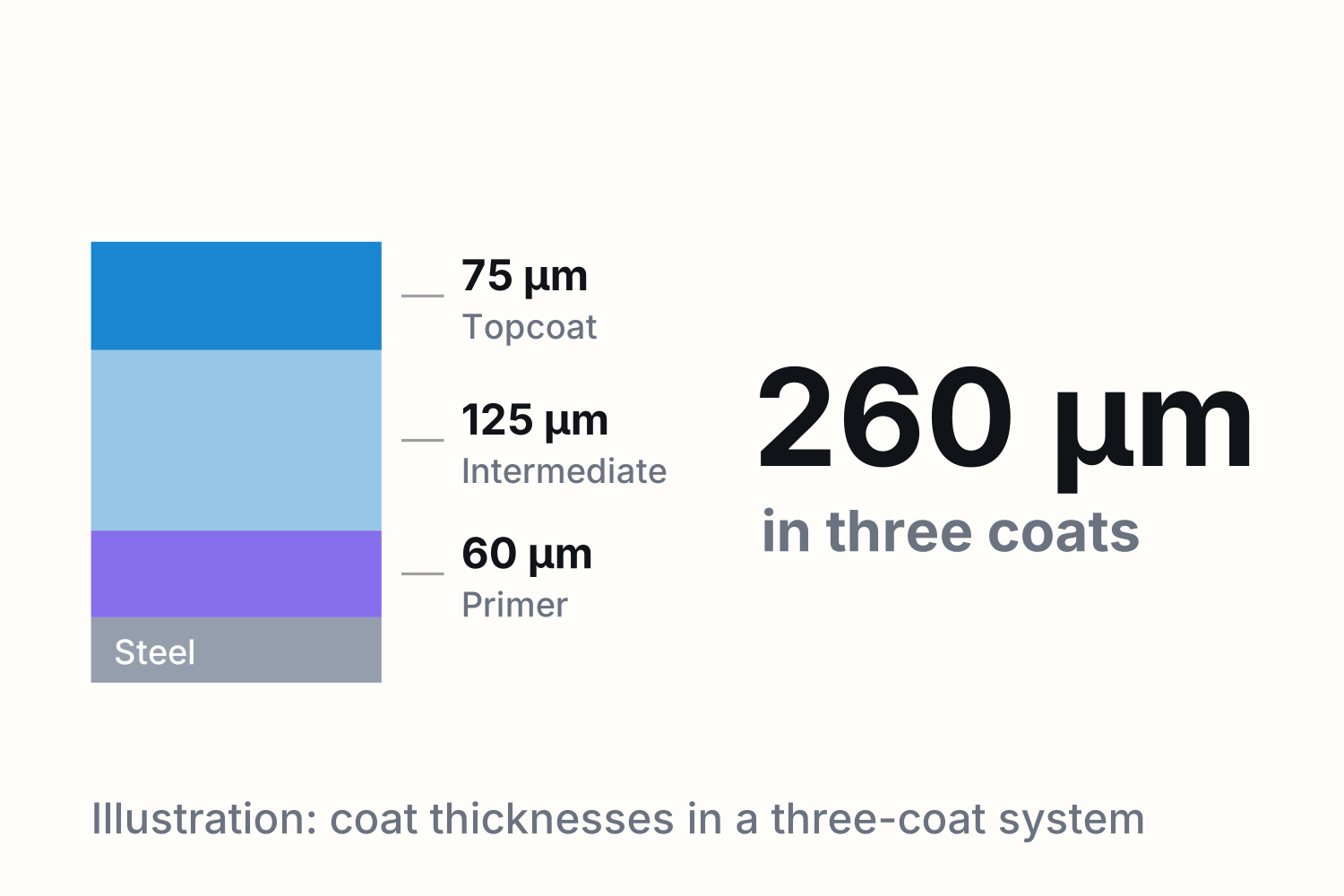
Every layer, from one non-destructive measurement
Chameleon resolves the individual layer thicknesses inside a multilayer stack from a single non-destructive measurement. You can review whether each layer matches design intent, whether the stack sequence is correct, and whether one specific layer accounts for the variation seen in total build.
Each interface in the stack returns its own reflection, which is what separates per-layer values from the single total a contact gauge reports. That mechanism is set out in how terahertz thickness measurement works, and the trade-offs against contact and acoustic methods in terahertz versus ultrasound thickness measurement. Where only the outer boundary matters, single-layer thickness measurement covers it, and the acquisition workflow is described on the Chameleon product page.
What it changes in practice
Individual layer thicknesses from the same measurement.
Layer order and presence verified without sectioning.
The same method extends into area-based layer mapping.
Per-layer thickness retrieved from a single measurement
In multilayer maritime coating work, Chameleon retrieved the accumulated thickness alongside each individual layer thickness from a single measurement position. The same approach extends into mapped acquisition when broader area review is needed.